
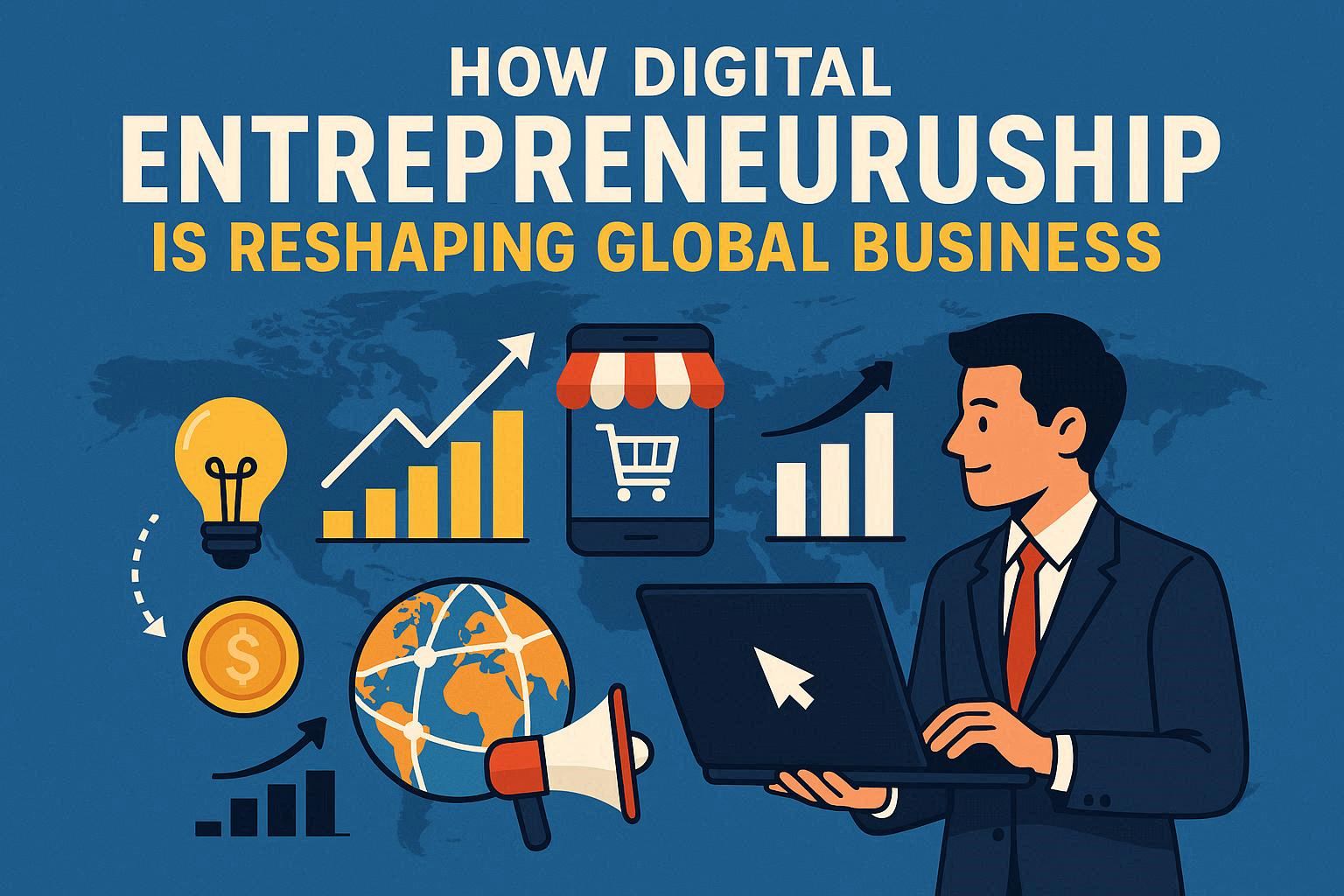
Digital entrepreneurship is no longer just a trend—it has become a driving force behind global economic change. In recent years, the rise of technology, online marketplaces, artificial intelligence, and remote work has democratized business creation, allowing entrepreneurs from all regions to launch and scale ventures without traditional limitations. Whether it’s online consulting, e-commerce, digital marketing, fintech, or SaaS platforms, digital entrepreneurship is reshaping industries, creating new opportunities, and transforming how businesses operate worldwide.
This article explores how digital entrepreneurship influences global business, including key trends, opportunities, and challenges, along with insights into how individuals and companies can position themselves for success in this new digital economy.
The Rise of Digital Entrepreneurship
Traditional entrepreneurship often required significant capital, physical offices, and a large workforce. Today, digital tools have made it possible to launch a fully functional business with minimal upfront investment. Cloud-based platforms, website builders, payment gateways, and social media marketing allow entrepreneurs to scale businesses from laptops and smartphones.
With technological advancements, entrepreneurs can target global markets instantly. For example, digital marketplaces such as Amazon, Etsy, Shopify, Upwork, and Fiverr allow small businesses to sell products and services globally. This shift has not only transformed traditional business models but has also created new types of entrepreneurs known as solopreneurs, digital creators, and gig-based professionals.
Globalization and Market Expansion
Digital entrepreneurship enables businesses to reach international audiences without the need for physical presence. Companies can now sell products, provide consulting, offer digital courses, or build SaaS applications for global clients. Digital marketing tools, analytics, and SEO strategies help entrepreneurs target specific customer segments in real-time.
Furthermore, globalization has accelerated cross-border collaborations. Businesses can hire remote employees or freelancers from different countries, helping reduce operational costs while accessing skilled talent. This shift has revolutionized small and medium-sized enterprises (SMEs), turning them into global competitors.
The Role of Technology in Business Transformation
Technology is at the heart of digital entrepreneurship. From AI-powered chatbots to cloud computing and automation tools, digital solutions allow entrepreneurs to streamline operations, improve customer experience, and reduce costs. Some key technologies reshaping entrepreneurship include:
- Artificial Intelligence (AI): Helps in automated customer support, personalized marketing, and predictive analytics.
- Cloud Computing: Enables scalability without heavy infrastructure investment.
- Blockchain: Provides secure digital transactions and decentralized business models.
- Automation: Reduces repetitive tasks, increasing efficiency and productivity.
These technologies empower entrepreneurs to launch innovative businesses and offer better value to customers at a lower cost.
E-Commerce and Digital Marketplaces
E-commerce is one of the fastest-growing sectors of digital entrepreneurship. Online retail businesses, dropshipping, print-on-demand stores, and subscription-based services have gained global popularity. Platforms like Shopify, Amazon, and WooCommerce provide ready-to-use tools for building online stores, managing inventory, and accepting payments securely.
Additionally, digital marketplaces and passive income models—such as affiliate marketing, digital product selling, and content monetization—allow entrepreneurs to generate income without traditional business constraints. The future of commerce lies in hybrid models that combine physical and digital experiences, such as social commerce and live shopping.
Remote Work and Virtual Teams
Remote work has transformed business operations globally. Digital entrepreneurs no longer need to establish physical offices or hire full-time employees. Instead, they rely on distributed teams, freelancers, and virtual assistants to handle tasks such as web development, marketing, content writing, and customer support.
Tools like Slack, Zoom, Trello, and Asana have made remote collaboration seamless, allowing teams to function efficiently across borders. This shift not only reduces operational expenses but also increases access to international talent, making it easier for startups to compete in global markets.
Social Media and Digital Branding
In digital entrepreneurship, branding is everything. Social media platforms such as Instagram, LinkedIn, YouTube, TikTok, and X (formerly Twitter) allow businesses to reach audiences directly, build trust, and establish strong brand identities. Content marketing, influencer partnerships, video content, and storytelling are powerful tools for gaining visibility and attracting customers.
Entrepreneurs who understand digital branding strategies can build loyal audiences and monetize their expertise through courses, consultations, and memberships.
Challenges Facing Digital Entrepreneurs
While digital entrepreneurship provides many opportunities, it also presents unique challenges. These include:
- Intense competition in global online markets.
- Digital security threats, including hacking and data breaches.
- Dependency on technology and platform algorithms.
- Lack of digital literacy in some regions.
- Regulatory and tax compliance for cross-border operations.
To overcome these challenges, entrepreneurs must stay updated with emerging technologies, prioritize cybersecurity, and develop strong legal and financial foundations for their businesses.
How to Succeed as a Digital Entrepreneur
Success in digital entrepreneurship depends on innovation, adaptability, and customer value. Here are some best practices for thriving in the digital market:
- Offer solutions to real-world problems.
- Focus on niche markets rather than overcrowded industries.
- Invest in learning digital tools, marketing, and data analytics.
- Build strong brand identity and customer relationships.
- Adopt scalable business models like SaaS, e-commerce, or digital services.
Ultimately, the most successful entrepreneurs are those who combine creativity with technology and remain flexible in a rapidly changing environment.
Future of Digital Entrepreneurship
The future of digital entrepreneurship will be fueled by AI, Web3, metaverse technologies, and decentralized business models. Web3 platforms will empower entrepreneurs to build decentralized applications (dApps), digital communities, and blockchain-based startups. AI automation will reduce costs and increase efficiency, while virtual reality (VR) will transform customer engagement.
In the next decade, digital entrepreneurship will shift from simple online businesses to high-tech digital ecosystems where innovation, collaboration, and automation drive growth.
Conclusion
Digital entrepreneurship has revolutionized global business by eliminating traditional barriers and opening doors to innovation and global expansion. With access to technology, talent, and digital tools, entrepreneurs can build successful, scalable companies from anywhere in the world. The future belongs to digital-first businesses that embrace technology, creativity, and customer-centric strategies. Whether you’re an aspiring entrepreneur or an established business owner, now is the best time to explore the limitless possibilities of the digital economy.