
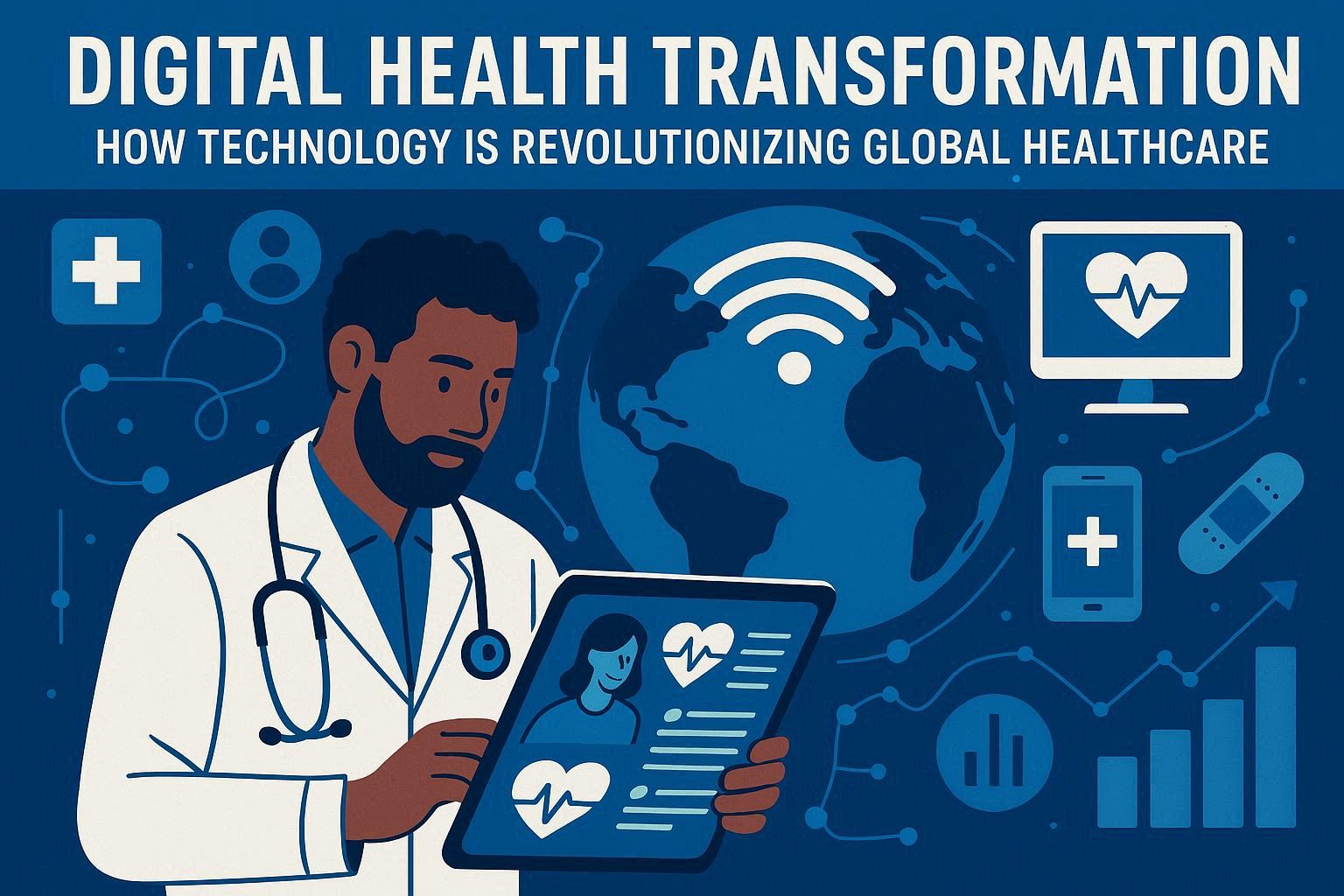
The global healthcare industry is undergoing a rapid digital transformation. Innovations such as telemedicine, artificial intelligence (AI), blockchain, wearable devices, and mobile health applications are reshaping how patients access care, how doctors deliver treatments, and how data is securely managed. These technologies are not only improving healthcare efficiency but also making it more personalized, accessible, and patient-centered.
In this article, we explore the rise of digital health, its key technologies, benefits, challenges, and the future of healthcare in a connected, data-driven world.
What Is Digital Health?
Digital health refers to the use of information technologies, smart devices, data analytics, and connectivity tools to enhance the delivery of healthcare services. It encompasses a wide range of innovations, including:
- Telemedicine and virtual consultations
- AI-based diagnostics and treatment planning
- Wearable health monitoring devices
- Electronic health records (EHRs)
- Blockchain for secure patient data management
- Mobile health (mHealth) applications
- Robotics and automation in surgery and hospitals
Digital health is not just about technology but about improving patient experiences, enhancing outcomes, reducing healthcare costs, and creating smarter healthcare ecosystems.
The Rise of Telemedicine
One of the biggest shifts in modern healthcare is the rise of telemedicine. Telemedicine allows patients to interact with healthcare professionals remotely, using video calls, chat applications, or AI-powered platforms. It became especially popular during the COVID-19 pandemic, allowing millions to access medical care without visiting clinics physically.
Major benefits of telemedicine include:
- Convenience: Patients can consult doctors from the comfort of their homes.
- Reduced costs: No need for travel or physical facilities.
- Access to specialists: People in remote or underserved areas can consult top specialists globally.
- Continuous care: Ideal for follow-ups and chronic disease management.
Telemedicine is now a core healthcare service, especially in chronic care, mental health, dermatology, and post-surgical recovery.
AI and Machine Learning in Healthcare
Artificial Intelligence (AI) is revolutionizing healthcare by making diagnostics faster, treatments more accurate, and patient management predictive rather than reactive. AI analyzes vast medical datasets to identify patterns, detect diseases earlier, and even suggest treatment plans.
Key applications of AI in healthcare include:
- Diagnostics: AI can detect diseases such as cancer, diabetes, and heart conditions earlier than traditional methods.
- Medical imaging: AI-powered software analyzes X-rays, CT scans, and MRI images with high accuracy.
- Drug discovery: AI accelerates the research and testing of new medicines.
- Virtual assistants: AI chatbots provide preliminary medical guidance and patient support.
AI-powered tools help doctors make better decisions, reduce medical errors, and provide personalized treatment plans based on patient-specific data.
Wearable Health Technologies
Wearable devices such as smartwatches, fitness trackers, and biometric sensors have turned everyday users into active participants in monitoring their health. These devices track vital signs such as heart rate, blood pressure, sleep quality, oxygen levels, and even detect signs of heart disease and respiratory disorders.
Wearable technology benefits include:
- Early detection of health risks through constant monitoring.
- Motivating healthier lifestyles via fitness tracking and reminders.
- Improved chronic disease management for diabetes, hypertension, and heart disease.
- Integration with healthcare systems for real-time monitoring by doctors.
Advanced wearables now include ECG sensors, glucose monitors, and AI-powered health alerts.
Blockchain for Secure Medical Data
Data privacy and security are major concerns in healthcare. Blockchain technology is emerging as a powerful solution to protect patient data, ensure transparency, and prevent fraud. Blockchain stores medical data in secure, decentralized records that can only be accessed with authorized permission.
Benefits of blockchain in healthcare:
- Enhanced data security against cyber-attacks and data manipulation.
- Patient control over who accesses their health data.
- Prevention of medical fraud by verifying the authenticity of prescriptions and medical histories.
- Efficient sharing of health data between hospitals, labs, and insurers.
Blockchain can also support digital prescriptions, telehealth certificates, and insurance claims processing.
Mobile Health (mHealth) Applications
Mobile health applications are transforming how people manage their health. These apps provide virtual checkups, mental health support, fitness tracking, medication reminders, and secure health communication channels.
Popular uses of mHealth apps include:
- Chronic disease management (diabetes, hypertension)
- Mental health therapy sessions and chat support
- Pregnancy and newborn care monitoring
- Weight loss and fitness coaching
- Medication management with reminders
By combining convenience, accessibility, and real-time data, mHealth apps empower individuals to take control of their health.
Benefits of Digital Health Transformation
- Improved patient accessibility: Healthcare services reach remote and underserved areas.
- Reduced costs: Automation reduces administrative and operational expenses.
- Enhanced accuracy: AI minimizes human errors in diagnosis and treatment.
- Faster decision-making: Real-time data helps in immediate response to health conditions.
- Personalized care: AI and analytics deliver tailor-made treatment plans.
Challenges in Digital Health Adoption
Despite its many benefits, digital transformation in healthcare faces challenges:
- Privacy and data protection concerns due to cyber-attacks.
- Regulatory compliance and evolving healthcare laws.
- Digital divide in developing regions with limited internet access.
- Technology adoption resistance from traditional healthcare systems.
To overcome these challenges, governments and health organizations must develop strong digital policies, data protection laws, and inclusive healthcare platforms.
The Future of Healthcare Is Digital
The future of healthcare will be connected, intelligent, and patient-centric. Emerging innovations such as AI diagnostics, robotic surgeries, blockchain-powered health records, digital hospitals, metaverse medical training, and personalized genomic medicine will redefine medical services.
We are entering an era where virtual doctors, digital pharmacies, AI-driven health predictions, and wearable healthcare ecosystems become standard practices.
Digital health is not just the future — it is already reshaping today’s healthcare landscape. By integrating telemedicine, AI, wearable devices, blockchain, and mobile health apps, global healthcare is becoming more efficient, secure, personalized, and accessible.
Healthcare providers, governments, and technology innovators must work together to ensure that digital health solutions benefit everyone, improving health outcomes and empowering individuals to take control of their well-being.