
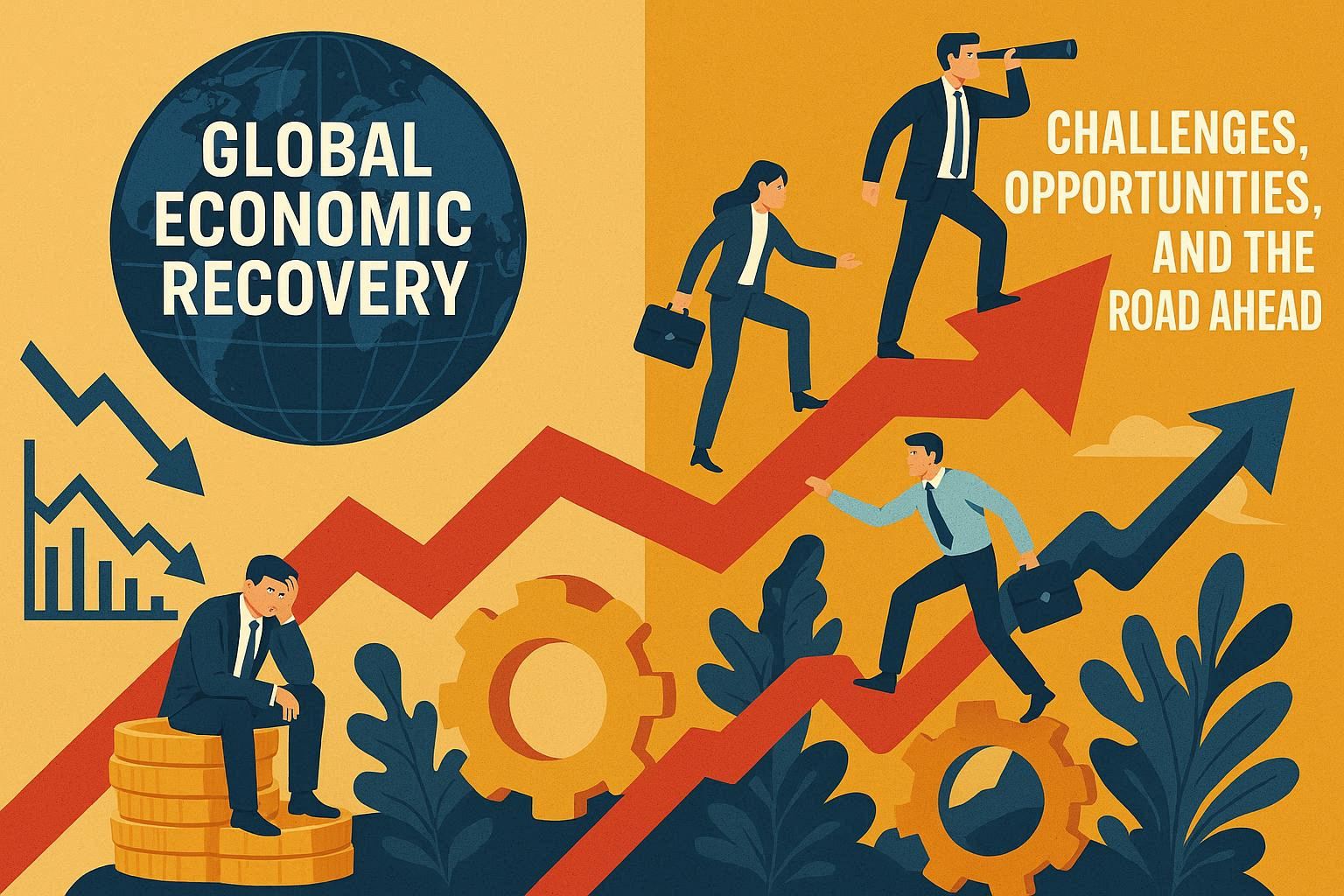
The global economy has experienced dramatic shifts in recent years due to factors such as post-pandemic recovery, geopolitical tensions, inflation, supply chain disruptions, and rapid technological advancements. As countries work to stabilize their economies, new opportunities are emerging in sectors such as digital innovation, green energy, global trade, and workforce transformation. This article explores the major challenges facing global economic recovery, future growth drivers, and strategies that countries and businesses can adopt to build more resilient economies.
Current State of the Global Economy
The world economy has been on a gradual recovery path, with most countries focusing on reducing inflation, stabilizing employment, and managing debt. Although economic conditions have improved compared to previous years, several regions are still facing weak demand, increasing fiscal deficits, and declining foreign investment. Rising interest rates have also affected business expansion, consumer spending, and housing markets.
Despite these challenges, global trade, digital innovation, and renewable energy investments have shown strong recovery signs, offering hope for long-term economic stability.
Key Challenges Affecting Economic Recovery
Several factors are influencing how economies recover and adapt. These include:
- Inflation and High Living Costs: Rising prices for food, energy, and housing continue to affect household budgets and business profitability.
- Supply Chain Disruptions: Logistics challenges and geopolitical tensions have impacted the availability and cost of goods worldwide.
- Rising Global Debt: Governments have accumulated significant debt due to stimulus packages and public spending.
- Geopolitical Instability: Trade conflicts, regional wars, and sanctions have slowed down international cooperation and investment.
- Labor Market Challenges: Skill shortages and changing work trends have created mismatches between employers and job seekers.
Growth Opportunities in the Digital Economy
Digital transformation is one of the strongest drivers of economic growth. Countries embracing digital infrastructure, fintech, artificial intelligence, and e-commerce are creating new business models and job opportunities. The digital economy enables small and medium enterprises (SMEs) to compete globally without requiring large capital.
Technologies such as blockchain, cloud computing, automation, and remote work tools are helping businesses reduce costs, increase efficiency, and reach international markets. Governments investing in digital education, cybersecurity, and innovation hubs are likely to see stronger long-term economic growth.
Role of Green and Sustainable Economy
The shift toward renewable energy, sustainability, and eco-friendly development is another major growth driver. Many countries are now investing in clean energy technologies such as solar, wind, and hydrogen to reduce dependency on fossil fuels and address climate change.
Green investment also creates new jobs in sectors like electric vehicles, smart manufacturing, energy-efficient construction, and recycling industries. Businesses that adopt sustainable practices are likely to benefit from government incentives, better brand reputation, and long-term profitability.
Workforce Transformation and the Future of Jobs
The global workforce is undergoing a major transformation due to automation, artificial intelligence, and digitalization. While some traditional jobs are being replaced by technology, new roles are emerging in fields like data analysis, cybersecurity, digital marketing, health technology, and software development.
To remain competitive, workers need to acquire digital skills, adaptability, and continuous learning. Companies must also invest in employee training, remote work infrastructure, and flexible work arrangements to attract and retain skilled talent.
Strategies for Strong Economic Recovery
Governments and businesses can accelerate economic growth by focusing on strategic investments, innovation, and inclusivity. Some recommended strategies include:
- Investing in digital infrastructure and technological skills development.
- Strengthening trade relations and promoting cross-border economic cooperation.
- Supporting small and medium enterprises with financial and regulatory incentives.
- Encouraging innovation through startup support and entrepreneurship programs.
- Promoting sustainability and green technologies for long-term growth.
- Improving healthcare, education, and labor market policies.
Global Trade and Economic Cooperation
Global trade remains a key pillar of economic growth. Countries that maintain strong trade partnerships benefit from increased exports, advanced technology sharing, and investment opportunities. Organizations such as the World Trade Organization (WTO), the International Monetary Fund (IMF), and regional economic unions play vital roles in facilitating international cooperation, funding, and regulatory alignment.
Economic cooperation encourages stability, innovation, and balanced growth, making it easier for developing countries to integrate into the global economy.
The Future of the Global Economy
The future of the global economy will be shaped by digital innovation, demographic changes, and sustainability-focused policies. Businesses that adapt to new technologies, invest in talent, and embrace global collaboration will thrive in this new era. Governments must focus on creating inclusive, resilient, and forward-looking policies that protect citizens while encouraging entrepreneurship and innovation.
With smart planning, the global economy can emerge stronger, more sustainable, and more innovative than ever before.
Conclusion
The road to global economic recovery is complex, but it is also full of opportunities. Digital transformation, sustainability, innovation, and international cooperation will remain essential pillars of future growth. By adopting balanced economic policies and investing in people, technology, and infrastructure, nations and businesses can build stronger, more resilient economies for generations to come.